Crypto cashout guide
Duel Withdrawals 2026
 Available in US
Duel is reported to have no platform withdrawal minimum and no platform fee, while its own processing is positioned as instant. Final arrival still depends on the blockchain route, network confirmation and any checks that apply to the account or transaction.

- Platform minimumNone reported
- Platform feeNone reported
- Casino-side processingPositioned as instant
- Final timingDepends on network confirmation
The platform removes some friction, but not the blockchain stage
Duel is reported to set no platform withdrawal minimum and no platform fee. That keeps the casino-side pricing model uncomplicated, but the receiving route still has its own fee, confirmation pattern and address requirements.
The parent payments guide covers the full crypto flow. For withdrawals, the useful distinction is between what happens before Duel releases the transaction and what happens after the transaction is handed to the blockchain. Those stages can move at different speeds.
There is also no fiat balance inside Duel. If a user wants to convert a received cryptocurrency into fiat, that conversion occurs outside the casino through a third-party route and can create another fee layer after the withdrawal has arrived.
Casino release is only the first clock
Duel positions its own processing as instant. That describes the platform stage, not a guaranteed end-to-end arrival time.
The blockchain starts a second clock
After release, propagation and confirmation depend on the selected network. That stage can vary independently of the casino's processing speed.
A zero platform fee still leaves network cost
The user remains responsible for the blockchain fee, so transfer size and route still matter even when Duel does not add its own withdrawal charge.
Specific minute claims should be read as observations, not promises
Duel's own positioning describes withdrawals as instant on its side. Independent coverage also characterizes withdrawals as fast or near-instant. Some sources cite under 30 minutes, Duel claims under 15 minutes, and other reviews describe sub-5-minute withdrawals in particular cases.
Those figures are useful as context but not as a service guarantee. A single withdrawal can take longer because the network stage is outside a fixed casino-side clock. The relevant blockchain, its current confirmation behavior and any checks attached to the transaction can all affect the end-to-end result.
The right operational question is therefore not “What exact minute will the money arrive?” but “Which stage is still pending?” If Duel has released the transfer, the remaining delay can sit on the network side rather than inside the casino.
The withdrawal path has distinct stages with different failure points
| Stage | What happens | Main variable | Reader check |
|---|---|---|---|
| Request | The user selects the asset, network and receiving details | Correct destination setup | Match the receiving wallet's supported network before confirming. |
| Platform review | Duel processes the withdrawal request | Casino-side processing and any applicable checks | Do not assume no routine KYC means checks can never occur. |
| Release | The transaction leaves the casino-side stage | Broadcast to the chosen network | Use the transaction status to distinguish release from final arrival. |
| Network settlement | The blockchain propagates and confirms the transaction | Network confirmation behavior | Allow for network time rather than treating casino release as final settlement. |
| Wallet arrival | The receiving service recognizes the transfer | Receiving-wallet handling | Verify that the destination supports the same asset and route selected at withdrawal. |
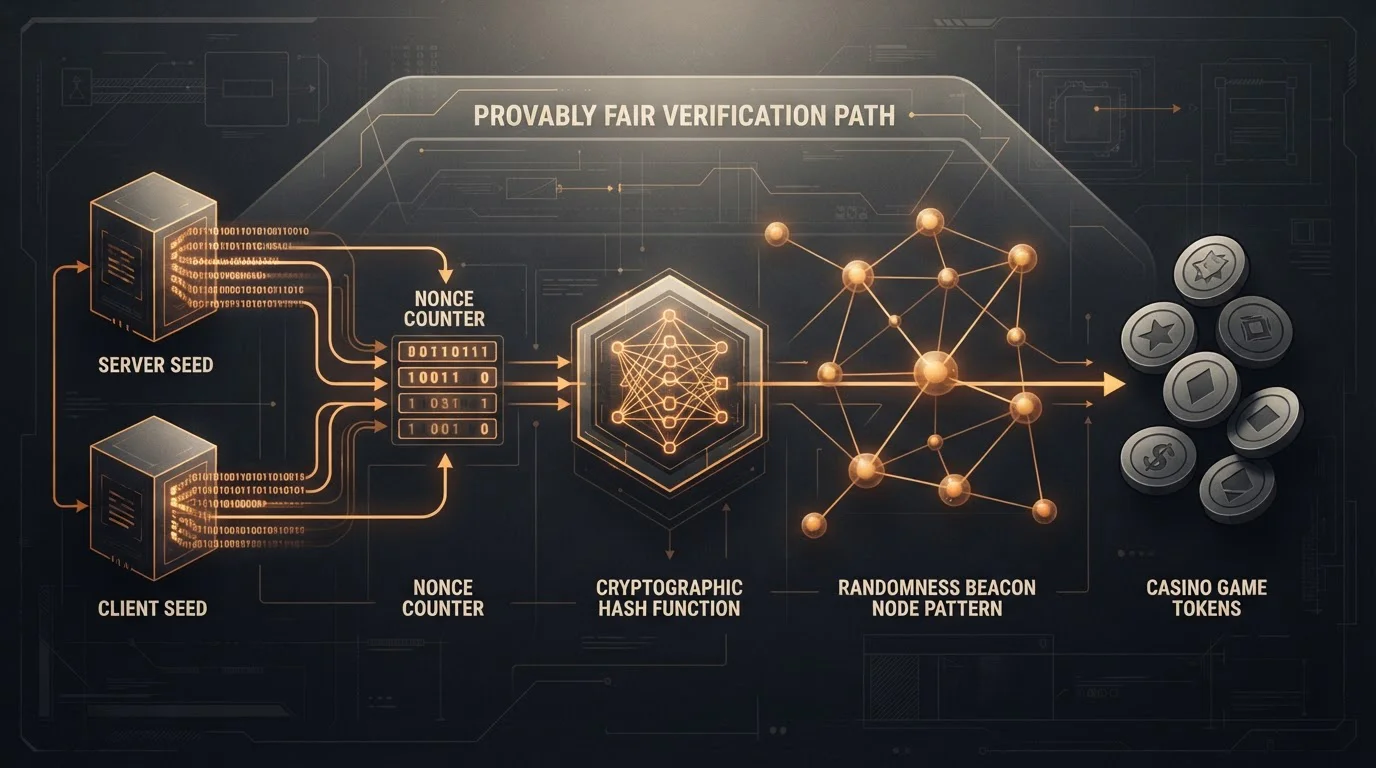
This stage model also explains why provably fair game verification and payout timing are separate concepts. The provably fair guide deals with verifying game-result mechanics; it does not prove, predict or accelerate a withdrawal.
A receiving wallet or exchange can also recognize an incoming transfer on its own schedule after the transaction has reached the network. That interface-level delay is separate from Duel's release step. When a cashout seems slow, checking the transaction state and the receiving service separately gives a clearer picture than treating every minute of waiting as casino processing time.
A clean cashout starts with the receiving wallet, not the submit button
- Choose the cryptocurrency you want to withdraw and identify the network offered for that route.
- Confirm that the receiving wallet or exchange accepts the same asset on the same network.
- Copy the receiving details carefully and compare them before submitting the request.
- Review the network fee and the amount that will remain after that fee.
- Submit the withdrawal and separate casino-side release status from later blockchain confirmation.
If the same wallet was funded from a recent deposit, that history can help the user remember which network was used, but it should not replace a fresh check. The deposit guide explains why coin and network matching should be checked every time rather than assumed from a previous transaction.
The hub's Crypto Transfer Friction Calculator can show how a self-entered network fee affects the net amount received. It does not estimate live blockchain fees or predict payout time.
No platform minimum and no platform fee shift attention to transfer economics
Duel is reported to have no platform withdrawal minimum and no platform fee. That means there is no single casino-set figure that defines when a withdrawal becomes efficient. The practical floor depends on how large the blockchain fee is relative to the amount being moved.
Suppose a user chooses to withdraw 0.050 units and enters a network fee of 0.0005 units. The fee burden is 1% of the withdrawal. At 0.500 units with the same 0.0005-unit fee, the burden falls to 0.1%. The example is mathematical only; it is not a claim about a live network fee or a Duel charge.
- Separate Duel's platform fee from the blockchain network fee.
- Judge the network fee relative to the withdrawal amount.
- Keep any later fiat-conversion fee separate from the casino cashout itself.
- Verify the receiving network before submitting because blockchain transfers are generally irreversible.
No routine KYC still leaves room for age, location and risk-based checks
Duel is positioned as not requiring routine KYC to play or withdraw, and some reviews describe no-KYC withdrawals. That wording should not be interpreted as guaranteed anonymity or as a promise that identity-related checks can never occur.
One review notes age and location verification through Checkin.com, while the broader material leaves room for risk-triggered verification. The practical conclusion is narrow: routine identity verification may not be part of the normal cashout flow, but additional checks can still apply depending on the situation.
What the reported model suggests
- No routine KYC is positioned as the default play and withdrawal flow.
- Withdrawals are generally described as fast or near-instant on the platform side.
What remains variable
- Age and location checks can still be part of the account flow.
- Risk-based verification can still be requested.
- Blockchain confirmation remains separate from casino-side processing.
Withdrawal questions that separate claims from the actual transfer path
Does Duel have a minimum withdrawal?
No platform withdrawal minimum is reported. Network-fee economics can still make very small transfers inefficient.
Does Duel charge a withdrawal fee?
No platform withdrawal fee is reported. The user still pays the relevant blockchain network fee.
Are Duel withdrawals instant?
Duel positions its own processing as instant, and reviews generally describe withdrawals as fast. Final wallet arrival still depends on network confirmation and any checks that apply.
Does Duel always withdraw without KYC?
No routine KYC is the stated positioning, but age, location and risk-based verification can still apply. It should not be treated as guaranteed anonymous withdrawal.
Why can a released withdrawal still take time to arrive?
Casino release and blockchain settlement are separate stages. After Duel releases the transaction, the selected network still has to propagate and confirm it before the receiving wallet recognizes the funds.
Duel's cashout model is fast-looking, but still network-dependent
No reported platform minimum and no reported platform fee make the cashout terms relatively simple. The more important variables are the ones that remain outside a fixed casino promise: receiving-network compatibility, blockchain confirmation, the network fee and any verification triggered by the account or transaction. Duel's platform-side speed can reduce one part of the wait without eliminating those other stages.